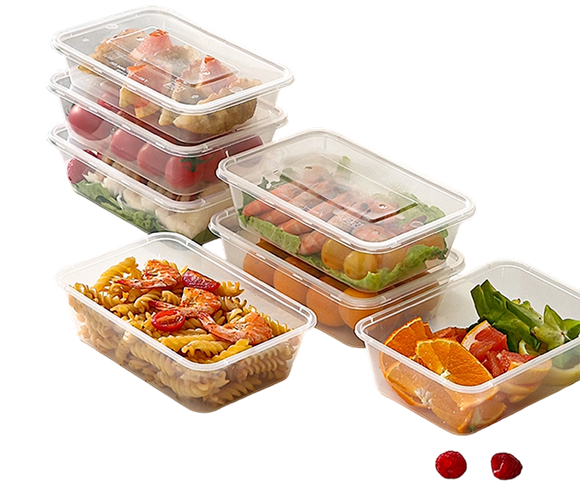
When a takeaway meal arrives with a warped lid, a leaking sauce, or a container that cannot go into the microwave, convenience disappears quickly. This guide evaluates PP food containers for takeaway and microwave-safe PP meal prep containers in real use, including portion control, leak-resistant lids, and food contact safety. It also explains how reusable polypropylene food containers perform in terms of polypropylene (PP), chemical migration, and thermal resistance, so buyers can select a suitable format instead of relying on vague claims.

Why PP Food Containers Matter in Takeaway and Meal Prep
Food packaging has to solve several problems at the same time. A restaurant needs a container that can be filled efficiently, resist ordinary handling, and keep liquid food inside during delivery. A meal-prep user needs predictable portion sizes, stackability, refrigeration performance, and a safe way to reheat food. These requirements are related but not identical, which is why a container that works for dry rice and vegetables may be unsuitable for soup or oily curry.
Polypropylene is a thermoplastic polymer widely used for food tubs, hinged takeaway boxes, deli containers, and reusable storage products. Its relatively high softening and melting range compared with some other common packaging plastics makes it useful for hot-fill and reheating applications. However, the actual performance depends on wall thickness, shape, lid design, additives, manufacturing quality, and the instructions printed on the specific product.
PP Food Container Advantages for Takeaway
PP Takeaway Containers Handle Hot Food More Reliably
Many PP containers are designed for hot food and microwave reheating. Polypropylene typically melts at approximately 160–170°C, although the practical service temperature is lower and varies by grade and construction. A microwave heats food, not the plastic directly, so the container may remain below its melting point while the food itself becomes much hotter. Localized overheating can still deform a thin container, especially when food contains oil or sugar.
For takeaway operators, this means a PP box can accommodate meals packed shortly after cooking without becoming brittle at ordinary serving temperatures. It is still important to distinguish between hot-food compatible and microwave-safe. A package should carry a microwave symbol or written manufacturer instruction before a customer reheats it. Containers without that information should not be promoted as microwave-safe simply because they are made from PP.
PP Food Containers Support Efficient Portion Control
Standardized sizes help kitchens reduce filling errors and improve inventory control. For example, a 500–750 milliliter container can suit many individual rice, pasta, salad, or mixed-meal portions, while a 1,000-milliliter format provides more space for larger meals or separate side dishes. The correct capacity depends on food density and presentation; volume alone does not guarantee a specific serving weight.
For meal prep, consistent container dimensions make it easier to divide ingredients across several days. A user can prepare five containers with similar quantities instead of estimating every serving separately. Clear or translucent PP also allows staff and customers to identify the contents without opening the lid, reducing unnecessary handling.
Stackable PP Meal Prep Containers Save Storage Space
Rectangular and square PP containers generally use refrigerator and delivery space more efficiently than round containers. Matching footprints can reduce unused gaps in a refrigerator, food-service crate, or delivery bag. Nestable designs save space when empty, while stackable designs save space when filled; these are different features and should be checked separately.
Zhengjia and other manufacturers may offer multiple capacities, lid styles, and compartment layouts. Buyers should compare the base dimensions, lid dimensions, nesting ratio, and filled-container stability rather than judging stackability from product photographs alone. A container that stacks well when empty may slide when condensation or oil gets between the lids.
PP Food Packaging Is Lightweight and Cost Efficient
PP has a density of roughly 0.90–0.91 g/cm³, lower than many common rigid plastics. Lower density can reduce packaging weight when the container design uses an appropriate wall thickness. This supports lower transport mass and easier carrying, although the final result depends on the amount of plastic used, the lid structure, and whether the container includes a separate seal.
For high-volume takeaway businesses, unit price is influenced by container size, production volume, printing, lid type, and food-contact testing. A low-cost container may become more expensive in practice if it leaks, cracks during packing, or cannot be reused. The useful comparison is cost per successful serving, not price per empty box.
Reusable Polypropylene Food Containers Can Support Multiple Uses
Rigid PP is less likely to shatter than glass during ordinary transport and is usually more durable than thin single-use film packaging. This makes it suitable for customers who carry prepared meals to work, school, or the gym. Reuse can reduce the number of disposable containers required, but the environmental benefit depends on how many times the container is actually reused, how it is washed, and how far it is transported.
There is no universal number of safe reuse cycles for every PP container. Repeated washing, scratching, staining, and exposure to high heat gradually change the surface and shape. A commercial reusable container should be selected for repeated-use service and labeled accordingly. A thin takeaway box may tolerate a few careful reuses but should not automatically be treated as a long-life meal-prep product.
PP Food Container Disadvantages and Practical Risks
PP Containers Do Not All Provide the Same Leak Protection
Material selection alone does not prevent leakage. The most important factors are lid geometry, sealing pressure, flange flatness, hinge quality, and the viscosity of the food. A snap lid with four locking tabs may contain thick sauces under normal handling, while a loose press-fit lid may allow soup to escape when the container tilts.
Before using a container for delivery, fill it with water to the intended level, close the lid, invert it for several minutes, and move it in the same way a delivery bag would move. This is a screening test, not a certified laboratory test. Repeat it with hot food or oily sauce when those conditions are part of the service, because heat can soften components and oil can reduce friction at the seal.
PP Food Containers Have Limited Oxygen and Moisture Barrier Performance
PP is useful for short-term storage, but uncoated PP is not a high-barrier material for long shelf life. Oxygen and water vapor can pass through polymers at rates that vary with temperature, thickness, crystallinity, and product design. As a result, a PP container may be suitable for refrigerated meals prepared for several days but unsuitable for protecting oxygen-sensitive foods over long periods without an additional barrier layer or modified-atmosphere system.
This limitation matters for prepared salads, cut fruit, fried foods, and meals that lose texture when moisture moves between components. A divided container can separate wet and dry ingredients, but it cannot stop all vapor transfer. For crisp foods, vented lids may reduce condensation but can also reduce spill protection, so the design must match the food.
PP Food Containers Can Warp Under Excessive Heat
Although PP is commonly used in microwaveable packaging, heat resistance is not unlimited. Direct contact with a heating element, use in a conventional oven, exposure to a grill, or reheating an almost empty container can cause deformation. Oil-rich foods may reach higher local temperatures than water-based foods. Steam pressure can also build beneath a tightly sealed lid.
Users should loosen or remove the lid according to the manufacturer’s instructions before microwaving. They should never place a PP container in an oven unless the product is specifically rated for oven use. A microwave-safe label does not mean oven-safe, air-fryer-safe, or suitable for stovetop heating.
Repeated Reuse Can Cause Scratches, Odor, and Staining
PP is chemically resistant to many household substances, but it is not immune to wear. Sharp utensils can scratch the surface, strongly colored sauces can stain it, and fatty foods can leave odors if washing is incomplete. Scratches do not automatically prove that the container is unsafe, but deep damage can make cleaning more difficult and can indicate that the product has reached the end of its intended service life.
Replace a container when it has cracks, a permanently distorted base, a lid that no longer seals, sharp damaged edges, or persistent contamination that cannot be removed by normal washing. Do not continue using a container merely because the body still looks intact if the seal has failed.
PP Food Container Recycling Depends on Local Systems
Polypropylene is commonly identified by recycling code 5, but the presence of that code does not guarantee that a local recycling program accepts every pp food container. Food residue, dark pigments, attached silicone seals, labels, and mixed-material lids can affect sorting and processing. Recycling instructions therefore need to be checked against local collection rules.
Reuse is often more straightforward than recycling when a container is designed for repeated service and remains in good condition. Nevertheless, reuse should not be forced indefinitely. A damaged container that is difficult to clean can create more practical problems than a properly managed replacement.
Food Contact Safety of PP Food Containers
Food-contact safety is determined by the complete product, not only by the word “PP.” The polymer, colorants, stabilizers, processing aids, printing inks, adhesives, lid materials, and manufacturing process can all affect compliance. A responsible supplier should be able to provide relevant food-contact documentation for the intended market and use conditions.
PP itself is not made from bisphenol A in the same way as polycarbonate products, and many PP food containers are marketed as BPA-free. However, “BPA-free” does not by itself prove that every additive or component is suitable for every food and temperature. The more useful questions are whether the product is intended for food contact, whether it has been tested under the relevant conditions, and whether the instructions cover hot food, refrigeration, freezing, and microwave use.
How Chemical Migration Relates to PP Food Packaging
Chemical migration refers to substances moving from packaging into food. Migration depends on contact time, temperature, food acidity, fat content, and the chemical properties of the packaging. Hot, fatty, or acidic foods can be more demanding test conditions than cool, dry foods. This is why a container approved for room-temperature storage may have different instructions for hot filling or reheating.
Consumers should use packaging only within its labeled conditions. Food businesses should request a declaration of compliance or equivalent documentation, confirm the intended food types, and retain batch and supplier records. These steps are more reliable than relying on appearance, smell, or a generic claim such as “non-toxic.”
How to Choose PP Food Containers for Takeaway and Meal Prep
Match PP Container Capacity to the Meal
Choose capacity according to the actual food portion and headspace requirement. Dry meals may need less volume than soups because liquid food requires room to reduce splashing and pressure buildup. A container that is filled completely may leak even when the lid is well designed. For a takeaway operation, measure representative meals by weight and volume, then test the selected size with the highest-risk menu items.
Choose the Right PP Lid and Seal Structure
For dry or semi-solid meals, a standard snap lid may be adequate. For soup, curry, gravy, and oily dishes, choose a lid with a continuous sealing flange or a separate gasket when the design has been tested for that use. Hinged lids improve packing speed because the lid stays attached, while separate lids may offer stronger sealing and easier replacement.
Check whether the lid can be opened without spilling food, whether the locking tabs require excessive force, and whether condensation collects around the seal. A complicated lid can improve containment but may take longer to clean, which matters for reusable meal prep.
Confirm Microwave, Freezer, Dishwasher, and Temperature Instructions
Do not treat these four claims as interchangeable. A product may be microwave-safe but not freezer-safe, or dishwasher-safe only on the top rack. Freezing can make some plastics more brittle, while dishwasher heat and detergent can accelerate warping or surface wear. Follow the product’s stated temperature range and avoid using a container outside its tested conditions.
For commercial purchasing, ask for the product specification sheet, food-contact documentation, dimensions, capacity tolerance, carton quantity, and replacement-lid availability. Zhengjia can be considered when buyers need a manufacturer discussion about container formats, but the final decision should be based on documented specifications and sample testing rather than brand recognition alone.
Run a PP Food Container Trial Before Bulk Ordering
A short trial can expose problems that a catalog cannot show. Pack the hottest representative meal, close the container, hold it in the normal delivery position, and inspect it after 30–60 minutes. Test a cold meal after refrigeration, a liquid meal after inversion, and a filled stack after transport. For reusable products, wash samples repeatedly according to the intended cleaning method and inspect the seal, lid fit, staining, and odor.
Record measurable results such as leakage after 60 minutes, lid failure rate across 50 or 100 sample units, dimensions after washing, and the percentage of containers that remain stackable. These records give a purchasing team a clearer basis than terms such as “strong,” “premium,” or “leakproof.”
Are PP Food Containers Worth Buying?
PP food containers are usually worth using when the application involves hot takeaway meals, refrigerated meal preparation, short- to medium-term food storage, and practical transport. Their value is strongest when the container is correctly matched to the food, the lid has been tested, and the product is used within its temperature and reuse instructions.
They are less suitable when the main requirement is long-term oxygen protection, high-temperature oven cooking, indefinite reuse, or guaranteed recycling in every location. In those cases, buyers may need a different material, a multilayer barrier structure, a glass option, or a packaging system designed for the specific process.
The most balanced decision is to compare total operating performance: purchase price, packing speed, leakage, customer complaints, cleaning effort, replacement rate, storage space, and end-of-life handling. A slightly higher-priced container can be economical if it reduces failed deliveries, but a premium design is not justified if the menu does not need its extra sealing or durability.
Which Users Should Choose PP Food Containers?
Restaurants, caterers, meal-delivery companies, and home cooks should consider PP when they need lightweight packaging for hot or chilled food and want standardized sizes. It is particularly practical for rice bowls, pasta, vegetables, prepared proteins, salads with separate dressing, and meals intended for short-term refrigeration.
Choose a reusable PP model when the container is explicitly designed for repeated washing and the user can maintain it properly. Choose a single-use or limited-reuse model when the product is thin, the service involves high customer turnover, or the container cannot be reliably collected and cleaned. For soups and sauces, prioritize a tested seal over a low unit price. For crisp foods, prioritize ventilation and compartment separation.
In the end, the best PP food containers for takeaway are not simply the thickest or cheapest products. The right microwave-safe PP meal prep containers combine suitable capacity, tested sealing, clear food-contact instructions, and realistic reuse expectations. When reusable polypropylene food containers are selected for the correct menu and maintained within their thermal resistance, chemical migration, and food contact safety requirements, they provide a practical balance for both takeaway operators and meal-prep users.