American-Style vs Standard PP Food Containers: Key Differences
Aug.20, 2026
Share:
When buyers compare products for american-style plastic food container wholesale, they usually want more than a basic material description. They need to know which container will protect food, fit local eating habits, reduce leakage complaints, control landed cost, and remain reliable through repeated use. This guide compares American-style and standard PP food containers from a purchasing and actual-use perspective, with practical information for importers, distributors, restaurants, meal-prep companies, and food manufacturers.
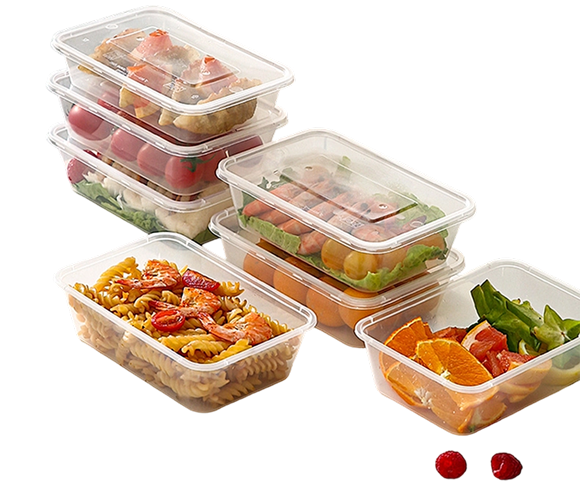
PP food container solutions from Zhengjia for retail, foodservice, and wholesale purchasing.
American-style and standard PP containers serve different purchasing priorities
American-style containers usually focus on portion size, stackability, and convenience
American-style PP food containers generally refer to container formats developed for North American foodservice, takeout, meal preparation, catering, and large-portion retail applications. The term is not an official material standard. It normally describes a combination of product features rather than a different type of plastic.
Larger or wider container footprints for generous meal portions.
Rectangular or square shapes that use shelf and refrigerator space efficiently.
Clear lids that make food identification easier.
Strong rims and snap-fit designs for delivery and repeated handling.
Compatibility with common American meal-prep, catering, and takeout practices.
Commercial pack sizes that support wholesale distribution.
Standard PP containers usually focus on general-purpose flexibility
Standard PP food containers are commonly used across many markets for household storage, restaurant preparation, food packaging, and everyday leftovers. They may be round, rectangular, or square, and their dimensions vary significantly by manufacturer.
Broad availability in different capacities and shapes.
Lower tooling complexity for common sizes.
Suitable for basic refrigeration, storage, and reheating.
More flexibility for markets with smaller portion sizes.
Often available in both disposable and reusable product grades.
The practical difference is therefore not simply American style versus standard style. Buyers should compare wall thickness, lid performance, capacity, temperature range, closure design, packaging, and compliance documentation for each specific model.
The core parameter table shows where the products actually differ
Use technical parameters to compare the same size and application
Nominal capacity alone does not reveal whether a container will perform well. A buyer should compare containers with similar capacity, lid type, and intended use. The following ranges are representative purchasing references, not universal specifications. Final values should be confirmed with the supplier's drawings and samples.
Parameter
American-style PP container
Standard PP container
Purchasing meaning
Common capacity
500 ml to 3,200 ml
250 ml to 2,000 ml
American-style formats often support larger meal and catering portions.
Typical shape
Wide rectangular or square formats
Round, square, or rectangular formats
Rectangular designs usually improve stacking and shelf use.
Material
Food-grade PP, usually polypropylene
Food-grade PP, usually polypropylene
The base material may be the same, so design and grade must be checked separately.
Temperature range
Often about -20 C to 120 C, depending on grade
Often about -20 C to 120 C, depending on grade
Microwave, freezer, and hot-fill claims require product-specific testing.
Lid structure
Snap-fit, reinforced rim, or vented lid options
Basic snap-fit or loose-fit lid options are common
Stronger lid engagement can reduce leakage and return complaints.
Leak resistance
Moderate to high when the lid and rim are matched correctly
Low to high depending on design
Do not judge sealing performance from the container body alone.
Stackability
Usually high because of uniform commercial geometry
Moderate to high, depending on shape
Important for storage, transport, and warehouse efficiency.
Reusability
Suitable for repeated use when made with adequate wall thickness
Ranges from single-use to reusable
Confirm wash-cycle expectations and deformation resistance.
Transparency
Usually clear or translucent for product visibility
Clear, translucent, or colored
Clear lids reduce opening and labeling errors.
Typical wholesale packaging
Nested containers with separate or attached lids
Nested sets, bags, cartons, or retail packs
Packaging affects carton volume, labor, and freight cost.
Dimensions and tolerances affect logistics more than many buyers expect
A container that is only slightly wider or taller can increase carton volume and reduce pallet efficiency. Buyers should request a complete dimensional drawing rather than relying on nominal capacity.
Measure external length, width, and height with the lid attached.
Confirm the nesting ratio when containers are stacked without lids.
Check the lid stacking height when products are packed for shipment.
Record the weight of the container and lid separately.
Confirm the number of units per inner carton and master carton.
Calculate container utilization before approving a large order.
Actual use experience depends on sealing, stability, and temperature performance
Leak resistance is the first real-world test for foodservice buyers
In actual use, buyers often experience more problems with the lid than with the PP body. A container may have a strong base but still leak if the lid is too flexible, the rim is uneven, or the closure force is inconsistent.
For soups, sauces, curries, and oily foods, test the filled container in several positions instead of checking it only while upright.
Fill the container to the supplier's recommended level.
Close the lid around the entire rim and confirm that all locking points engage.
Place the container upright for 30 minutes.
Turn it on its side for 30 minutes.
Invert it briefly if the product is advertised as leak resistant.
Inspect the lid, rim, corners, and carton for moisture or oil marks.
American-style containers often perform better in delivery applications when they use a reinforced rim and multiple locking points. Standard containers can perform equally well when the lid geometry is properly matched, but basic loose-fit lids are more likely to fail during transport.
Stacking stability affects warehouses, refrigerators, and delivery vehicles
Wide rectangular American-style containers usually offer a stable base and predictable stacking pattern. This is useful for prepared meals, catering trays, and commercial refrigerator shelves. Standard round containers may be easier to handle individually but can leave unused space around each unit.
Check whether empty containers nest without sticking together.
Stack filled containers to the maximum expected warehouse height.
Test whether the lid slides when containers are moved on a cart.
Place containers in a delivery bag to check movement during transport.
Inspect corner deformation after stacking for 24 hours.
For buyers with limited storage space, stacking efficiency can produce a larger cost saving than a small difference in unit price.
Temperature performance matters more than a general microwave claim
PP is widely selected for food containers because it can tolerate heat better than many other common packaging plastics. However, heat performance depends on resin grade, wall thickness, additives, lid material, vent design, and heating time.
Ask whether the container body and lid are both suitable for microwave use.
Confirm whether the product is intended for freezer storage.
Test hot food filling at the actual operating temperature.
Check for warping after repeated heating and cooling cycles.
Keep the lid partially open during microwave heating unless a vented lid is provided.
Do not assume that a microwave-safe body makes the complete package microwave safe.
There is no battery life, but repeated-use service life should be measured
PP food containers do not have batteries. In purchasing discussions, the more relevant performance measure is service life, including the number of wash, heating, freezing, and opening cycles the product can withstand.
A reusable commercial container should be evaluated for:
Lid fatigue after repeated opening and closing.
Rim deformation after dishwasher or hot-water cleaning.
Clouding, staining, or odor retention after contact with sauces.
Cracking at corners and hinge areas, if a hinged lid is used.
Loss of sealing force after repeated use.
Surface scratches that affect appearance and cleaning.
For disposable foodservice use, the relevant target may be one delivery cycle rather than long-term reuse. For meal-prep retailers and household storage, a stronger wall and more durable lid may justify a higher initial price.
American-style PP containers offer clear advantages but also have tradeoffs
The main advantages of American-style designs
Better portion suitability: Larger capacities fit prepared meals, family portions, salads, pasta, meat, and catering products.
Improved stacking: Uniform rectangular geometry can reduce wasted shelf, refrigerator, and carton space.
Strong delivery performance: Reinforced rims and secure lids can reduce leakage during transport.
Better product visibility: Clear bodies or lids help staff and customers identify contents quickly.
Commercial appearance: Consistent dimensions and clean geometry support branded food presentation.
Efficient portion control: Standardized capacities can simplify production and labeling.
Good wholesale compatibility: Common foodservice formats can be easier to sell to restaurants and catering operators.
The main disadvantages of American-style designs
Higher freight volume: Large and wide formats may increase carton size and shipping cost.
More storage demand: Bigger units consume more warehouse and retail shelf space.
Potentially higher material use: Larger capacities and reinforced structures may increase unit weight.
Less suitable for small portions: The format may be excessive for snacks, condiments, and individual side dishes.
Higher tooling requirements: Custom dimensions, vented lids, and reinforced closures may increase mold costs.
Market-specific fit: A design popular in North America may not match portion preferences in other regions.
Standard PP containers remain competitive in many applications
Standard PP containers are often the better choice when the purchasing group needs a broad size range, lower entry cost, or simpler storage. Their main weakness is inconsistency between suppliers. Two products with the same stated capacity may differ greatly in lid fit, wall thickness, and actual durability.
Choose standard formats for household leftovers and general food storage.
Choose round containers when soups, sauces, or compact handling are priorities.
Choose smaller sizes for snacks, toppings, condiments, and portion control.
Choose basic models when the product is intended for short-term or single-use service.
Choose stronger models when repeated washing and reheating are expected.
The best choice depends on the purchasing group's actual pain points
Importers and distributors need stable specifications and predictable landed cost
Importers usually worry about inconsistent batches, excessive carton volume, customs documentation, and customer complaints after delivery. They should prioritize a stable product specification over a low first quotation.
Request approved drawings for the body, lid, and closure details.
Define acceptable weight, dimension, color, and transparency tolerances.
Confirm the resin grade and whether recycled content is included.
Require batch records or inspection reports for large orders.
Restaurants and caterers need speed, leak control, and operational simplicity
Foodservice teams often open and close hundreds of containers in one day. A lid that is difficult to close can increase labor cost, while a weak seal can create food waste and customer complaints.
Select lids that close quickly with clear tactile feedback.
Test closure performance with hot, oily, and liquid foods.
Use stackable formats for refrigerator and delivery-bag organization.
Choose clear lids when staff need to identify meals rapidly.
Confirm whether the container can be safely reheated by the end customer.
Meal-prep brands need appearance, portion consistency, and repeat-use durability
Meal-prep companies sell organization and convenience as part of the product experience. Their containers should look consistent across the full product range and remain presentable after refrigeration, reheating, and transport.
Use standardized footprint dimensions across several capacities.
Confirm that lids are interchangeable only when intentional.
Test staining from tomato sauce, curry, oil, and colored vegetables.
Check whether labels adhere to the selected surface.
Measure actual usable capacity below the fill line.
Evaluate whether the container remains flat after repeated heating.
Retail buyers need packaging, shelf appeal, and clear compliance evidence
Retail products must perform in the store as well as in the customer's kitchen. A container that stacks well in a warehouse may still be unsuitable if the retail pack is difficult to display or lacks clear usage information.
Confirm retail pack dimensions and barcode placement.
Provide clear instructions for microwave, freezer, and dishwasher use.
Check whether the lid can be displayed securely without falling off.
Use transparent packaging or visible product photography when appearance matters.
Request food-contact declarations and relevant test documentation.
A structured sample test prevents expensive bulk-order mistakes
Test the body, lid, and package as one complete system
Samples should be tested under the same conditions that customers will use. A container can pass a visual inspection and still fail when filled, stacked, heated, frozen, or transported.
Visual inspection: Check for flash, sink marks, black spots, warping, sharp edges, and uneven transparency.
Dimensional inspection: Measure length, width, height, rim diameter, and lid fit against the approved drawing.
Weight inspection: Weigh the body and lid separately to identify material variation.
Closure test: Open and close the lid repeatedly and record changes in locking force.
Leak test: Use water, soup, oil, and a thick sauce to represent different food conditions.
Stack test: Stack filled units and move them on a cart or pallet.
Temperature test: Refrigerate, freeze, heat, and cool the product according to the intended application.
Cleaning test: Wash the product repeatedly and inspect for deformation, stains, odor, and lid fatigue.
Transport test: Pack the product in the proposed master carton and check for damage after handling.
Use simple scoring to compare suppliers objectively
A weighted score helps purchasing teams avoid choosing only by unit price. The weights can be adjusted to fit the business model.
Evaluation area
Suggested weight
Questions to ask
Leak resistance
25 percent
Does the lid remain secure with liquids and during transport?
Dimensional consistency
15 percent
Do units stack and close consistently across batches?
Heat and freezer performance
15 percent
Does the container resist warping under the stated conditions?
Service life
15 percent
Does repeated use weaken the lid, rim, or corners?
Logistics efficiency
10 percent
How many units fit in a carton and on a pallet?
Appearance
10 percent
Is the product clear, clean, and suitable for retail or delivery?
Total cost
10 percent
What is the delivered cost after packaging, freight, and defects?
Choose American-style or standard PP containers according to the application
American-style PP containers are suitable for commercial food operations
American-style containers are usually the stronger choice for buyers serving large portions, delivery meals, meal-prep programs, catering, prepared food counters, and organized warehouse systems.
Restaurants offering takeout meals and combination dishes.
Meal-prep companies selling several meals in one order.
Catering companies handling large portions and transport.
Food manufacturers packing salads, pasta, meat, rice, and prepared entrees.
Distributors serving North American foodservice customers.
Retailers that need consistent shelf presentation and stacking.
Standard PP containers are suitable for flexible everyday storage
Standard PP containers are often more practical for buyers with mixed applications and smaller portion requirements. They can provide good value when the lid is reliable and the product specification is controlled.
Household food storage and leftovers.
Small restaurants with varied container requirements.
Snack, condiment, and side-dish packaging.
Food businesses testing a new product before investing in custom tooling.
Markets where compact storage and low unit cost are more important than large portions.
Use a mixed product range when customer needs are not uniform
Many distributors should not choose only one style. A mixed range can cover large meal portions, smaller side dishes, sauces, and household storage without forcing every customer into one format.
Use large rectangular containers for main meals and catering.
Use medium rectangular containers for standard prepared meals.
Use small round or square containers for toppings and sauces.
Use matching lid families where interchangeability reduces inventory complexity.
Keep the number of colors and special lid types limited unless the market supports them.
Wholesale buyers should confirm quality, compliance, and commercial terms before ordering
Quality documents should match the exact material and product specification
Food-contact compliance is not proven by the word food grade alone. The documents should relate to the actual resin, colorant, additive package, and finished product being supplied.
Food-contact declaration for the intended market.
Material identification for the container body and lid.
Testing information for heat, freezer, and microwave claims where applicable.
Migration testing when required by the destination market.
Factory quality-control procedures and inspection standards.
Traceability information for production batches.
Commercial terms can change the final value more than the quoted unit price
Purchasing teams should compare the full order structure before selecting a supplier. A lower unit price may be offset by high minimum order quantities, inefficient packaging, high defect rates, or expensive replacement lids.
Confirm minimum order quantity for each size and color.
Ask whether body and lid quantities must be ordered in fixed ratios.
Confirm mold charges, sampling fees, and customization costs.
Request carton dimensions, gross weight, and loading quantities.
Define acceptable defect rates and replacement responsibilities.
Confirm production lead time and repeat-order capacity.
Check whether spare lids can be purchased separately.
Agree on inspection timing before shipment.
Supplier communication should focus on measurable requirements
Instead of asking whether a container is strong or leakproof, describe the operating condition. Specific requirements produce more useful samples and reduce misunderstandings between the buyer and factory.
State the food type, fill temperature, and expected storage temperature.
State whether the product is disposable or reusable.
Provide the target capacity and usable fill volume.
Specify the required stacking height and carton quantity.
Describe the expected opening and closing frequency.
Define the required appearance, transparency, color, and logo position.
Request written confirmation of all agreed specifications.
The final decision should balance performance, logistics, and customer fit
Choose American-style PP containers when delivery and portion capacity come first
Select an American-style design when the main risks are leakage during delivery, unstable stacking, inconsistent meal portions, and inefficient commercial handling. The additional material or packaging cost may be justified when it reduces food waste, labor time, product returns, and customer complaints.
Choose standard PP containers when flexibility and entry cost come first
Select a standard PP design when the application involves varied sizes, smaller portions, household storage, or early-stage market testing. A standard product can provide strong value if the supplier offers accurate dimensions, a reliable lid, stable production, and adequate documentation.
Use sample testing rather than marketing terms as the final decision standard
The most dependable purchasing decision comes from comparing samples under real operating conditions. Test the same food, temperature, stacking method, cleaning process, and transportation pattern that customers will use. Then compare the total delivered cost and expected service life rather than the unit quotation alone.
For buyers evaluating american-style plastic food container wholesale, Zhengjia can support the comparison with PP container formats for foodservice, retail, meal preparation, and distribution applications. The right choice is the container that matches the customer's portion habits, delivery conditions, storage system, compliance needs, and long-term cost target.


 Aug.20, 2026