EN


 Nov.17, 2026
Choosing between a 5-compartment food container and a 6-compartment food container is not simply a matter of adding one more section. Catering buyers must balance portion control, food presentation, packing speed, transport stability, cleaning effort, storage space, and total cost. For kitchens serving schools, hospitals, corporate lunches, airlines, events, and meal delivery programs, the right configuration can reduce packing errors and improve customer satisfaction.
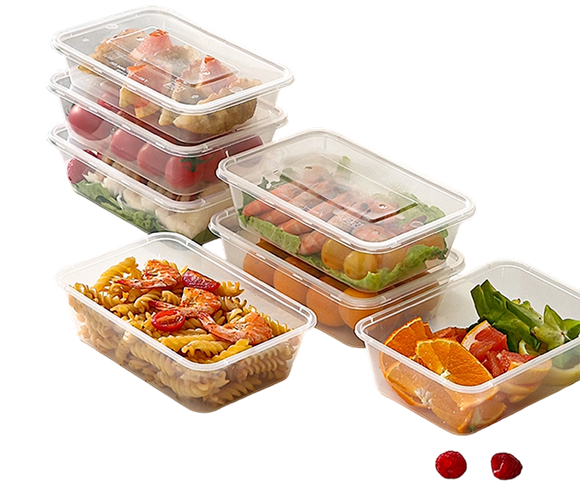
This comparison is designed for purchasing managers, caterers, foodservice operators, meal-prep companies, and institutional kitchens evaluating reusable or disposable compartment containers. Zhengjia provides food container solutions for organized meal service, and its product information can be reviewed through the following product image:

A 5-compartment design commonly includes one large main section and four smaller sections, or two medium sections combined with three smaller sections. This arrangement gives caterers enough separation for a main dish, two side dishes, vegetables, fruit, sauce, or dessert without making the tray difficult to fill.
The 5-compartment option is often preferred when menus change frequently or when the main course requires more volume. It can also be more practical for meals containing bulky food such as chicken pieces, pasta, rice bowls, sandwiches, roasted vegetables, or mixed salads.
A 6-compartment design adds one more dedicated section, which is useful when a meal must separate multiple sides, sauces, allergens, snacks, or nutrition categories. It can make a meal look more complete and organized, especially when the service model requires a fixed combination of items.
However, the extra compartment also reduces the average space available in each section. If the menu contains large portions, the additional divider may create congestion and make the tray harder to fill efficiently.
| Evaluation factor | 5-compartment container | 6-compartment container | Catering implication |
|---|---|---|---|
| Number of food categories | Suitable for four to five food categories | Suitable for five to six food categories | Choose according to the actual menu, not the maximum number of sections |
| Main-course capacity | Usually provides more usable volume | Usually provides less volume per section | 5 compartments are often better for bulky entrees |
| Food separation | Good separation for standard meals | Very good separation for complex meals | 6 compartments are useful for sauces, snacks, and allergen control |
| Portion control | Simple and fast for regular portions | More precise for multi-item menus | 6 compartments can support nutrition and diet programs |
| Filling speed | Generally faster | May require more placement steps | Important for large-volume production |
| Cleaning effort | Lower divider and corner burden | More corners and divider surfaces to clean | Inspect wash time and labor cost before ordering |
| Stacking and storage | Often easier to nest and stack | May require more storage space depending on shape | Confirm packed dimensions and nesting depth |
| Menu flexibility | Better for changing menus | Better for fixed menus with many components | Use 5 compartments for flexibility and 6 for structure |
| Unit cost | Often lower when materials and tooling are comparable | May cost more because of the additional structure | Compare total delivered cost rather than unit price alone |
| Heating performance | Depends on material, lid, and microwave instructions | Depends on material, lid, and microwave instructions | Compartment count alone does not determine heating safety |
| Battery life | Not applicable to ordinary food containers | Not applicable to ordinary food containers | For heated containers, evaluate the separate heating unit and battery system |
These figures are functional comparisons rather than universal specifications. Actual dimensions, capacity, material, temperature range, lid design, nesting ratio, and weight vary by manufacturer. A procurement team should request a technical drawing and physical sample before approving a large order.
In a busy kitchen, the container is part of the production line. A container that looks attractive but slows down portioning can increase labor cost across thousands of meals.
A 5-compartment container normally supports a faster sequence because its sections are larger and easier to identify. A 6-compartment container may require more careful placement, but it can reduce the need for small sauce cups or separate snack packaging.
Compartment count does not automatically determine whether a container will remain stable. Stability comes from the complete package structure.
During a practical test, fill the container with the heaviest normal meal and stack it at the intended height. Move the stack across a representative route that includes turns, short stops, loading ramps, and vehicle vibration. Check whether the lid lifts, the base flexes, or the containers slide against each other.
Thin sauces, soup, curry, oil-based dressings, and foods that release liquid create different sealing challenges. A 6-compartment container may separate wet foods more effectively, but more dividers can also create additional corners where food residue collects or where the lid must maintain contact.
For delivery programs, a 5-compartment container may be sufficient when wet ingredients are kept in one controlled section. A 6-compartment container is more appropriate when several sauces or moist side dishes must remain separate.
Neither 5-compartment nor 6-compartment construction guarantees microwave or hot-food performance. Buyers must verify the material, temperature range, lid instructions, and intended heating method.
Because the food is divided into separate sections, heating may be uneven. Dense food in one section may remain cooler than a moist food in another. Caterers should provide clear reheating instructions instead of assuming that every compartment can be heated in the same way.
Most compartment food containers have no battery and therefore have no battery life to evaluate. If the product is paired with a rechargeable heating base, the heating system should be assessed separately from the 5-compartment or 6-compartment tray.
For ordinary catering containers, buyers should replace battery life with more relevant tests such as lid retention, thermal stability, leak resistance, and stack strength.
Schools, factories, office cafeterias, and hospital meal services frequently serve standardized menus at high speed. Their priority is often consistent production rather than maximum menu separation.
A 5-compartment tray can also simplify training because workers have fewer small sections to identify. This can reduce packing mistakes during peak production periods.
Diet meal providers, senior care programs, hospitals, fitness meal services, and premium event caterers may need to separate a larger number of ingredients. In these settings, visual organization and portion accuracy may justify the extra compartment.
The 6-compartment design is most effective when every section has a planned purpose. An unused compartment adds material, cleaning, and packing complexity without delivering a practical benefit.
Meal delivery operations face vibration, temperature changes, stacking pressure, and delayed consumption. Their first purchasing question should be whether the container survives the route without leaks or lid failure.
A container that performs well on a packing table may fail in a delivery vehicle. The final decision should therefore include actual route conditions and the maximum planned stack height.
The practical lesson is that neither format is universally better. The 5-compartment option emphasizes efficiency and flexibility. The 6-compartment option emphasizes separation and menu structure.
Prepare at least three representative meals before selecting the final configuration. Include the lightest meal, the heaviest meal, and the meal with the greatest number of wet ingredients.
This test reveals whether the additional section in a 6-compartment container is genuinely useful or whether it reduces the space needed for the main course.
Reusable containers should be tested in the real washing process. A design that takes longer to clean can create a larger operating expense than the initial purchase price.
For disposable containers, evaluate how the packed units fit into cartons, delivery bags, and waste collection systems. Storage density can affect freight cost and warehouse capacity.
Ask for samples and conduct a handling cycle that reflects normal operations.
Record the results by container type. A slightly higher unit price may be justified if it reduces damaged meals, replacement orders, leakage complaints, and staff rework.
A reliable cost comparison should include the complete operating cycle.
A 6-compartment container may appear more expensive but reduce the need for separate sauce containers. A 5-compartment container may have a lower price and faster filling, but it may require additional packaging for small food items. The correct comparison is the cost per complete meal delivered in acceptable condition.
Purchasing groups can score each design according to the priorities of their operation.
For a factory cafeteria, packing speed and cost may receive the highest weight. For a premium event caterer, appearance and food separation may receive more weight. For a healthcare meal program, portion control, sealing, and handling consistency may be more important than the lowest price.
A 5-compartment container is generally the stronger choice for caterers that serve large volumes of standard or rotating meals. It is especially suitable when the menu contains one substantial entree, several ordinary side dishes, and limited sauce separation.
A 6-compartment food container is a better fit when the menu depends on distinct food categories, measured portions, and organized presentation. It is most valuable when each section will be used consistently rather than left empty.
Some catering businesses should not choose only one format. A mixed inventory can be practical when weekday meals require efficiency but special orders require additional separation.
This approach reduces the risk of forcing every menu into a container that does not match its portion structure.
For most high-volume caterers, the 5-compartment option is the practical starting point because it combines usable capacity, efficient filling, and manageable storage. For services built around detailed nutrition, premium presentation, or many small food components, the 6-compartment food container can provide greater control and a more organized customer experience.
The final choice should be based on real portions, real handling, and real delivery conditions. Zhengjia can be considered when buyers need compartment food container options that support consistent meal organization and professional catering operations. When the additional section serves a clear operational purpose, choose 6 compartments. When speed, flexibility, and main-course capacity matter most, choose 5.
Looking for a Reliable PP Food Container Manufacturer?
Request a Food Container Wholesale Quote Today! We would be happy to help!