EN


 Nov.17, 2026
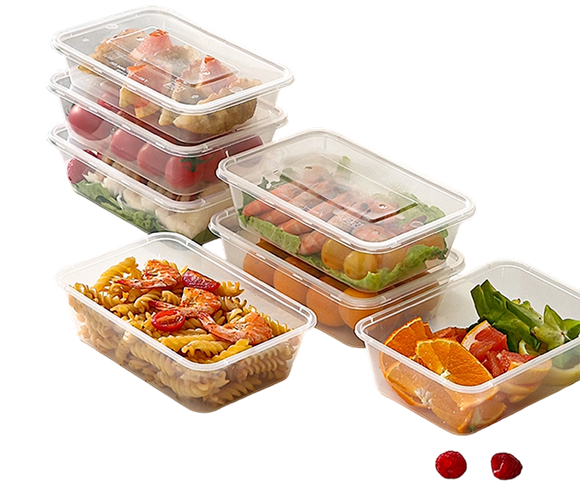
Choosing a 4 compartment food container for meal prep becomes important when one lunch must hold a main dish, vegetables, fruit, and a snack without mixing. Buyers searching for the best lunch box with four compartments or comparing a 3 compartment vs 4 compartment lunch box usually want better portion control, less leakage, and easier cleaning. This comparison examines the bento box format, meal-prep capacity, polypropylene construction, food-contact compliance, and hermetic seal performance. The Zhengjia image below shows the type of reusable plastic container commonly considered for school, office, and travel meals.

The practical question is not simply whether four sections are better than three. It is whether the extra divider helps your eating routine or reduces usable space. A commuter carrying rice, chicken, vegetables, and fruit may benefit from four separate sections, while someone carrying pasta and one side dish may find a three-compartment container easier to pack and wash.
A three-compartment container normally combines one large section with two smaller sections. A four-compartment model often uses one medium-large section and three smaller sections, although the exact layout varies by manufacturer. The number of compartments affects more than appearance: it changes food volume, separation, cleaning time, and the probability that a lid seal will be disturbed by overfilling.
| Feature | 3-Compartment Container | 4-Compartment Container | Practical Meaning |
|---|---|---|---|
| Typical total capacity | 900–1,200 ml | 900–1,200 ml | Capacity depends more on external dimensions than on the number of sections. |
| Large compartment size | Usually 450–700 ml | Usually 300–550 ml | Three sections are generally better for large sandwiches, pasta, or rice portions. |
| Small sections | Two | Three | Four sections separate more snack and side-dish types. |
| Portion control | Moderate | High | Additional dividers make it easier to assign vegetables, fruit, protein, and snacks. |
| Cleaning effort | Lower | Usually higher | Each extra corner creates another area where sauce or food residue can collect. |
| Food mixing | Low to moderate | Low when the lid seals each section correctly | Separate compartments help preserve texture and flavor. |
| Best use | Main meal plus two sides | Balanced meal plus fruit and snack | Choose according to the number of food types you actually pack. |
Capacity figures are typical market ranges rather than guarantees. A container labeled 1,000 ml may not provide 1,000 ml of usable food space because the manufacturer must reserve room for dividers, lid clearance, and expansion when food is heated. For accurate comparison, measure internal compartment dimensions rather than relying only on the advertised total volume.
Imagine preparing a weekday lunch at 7:00 a.m. You place 350 g of cooked rice and chicken in the largest section, 100 g of broccoli in the second, 120 g of melon in the third, and a small handful of nuts in the fourth. The four-compartment design prevents the fruit from absorbing savory sauce and stops nuts from becoming soft beside steamed vegetables. This is the strongest argument for a four-compartment food container: it supports food separation without requiring four separate boxes.
However, the same design can become inconvenient when the meal contains one bulky item. A large sandwich may not fit flat inside a small compartment. A whole apple, thick pastry, or salad with a separate dressing cup can also consume space quickly. In that situation, a three-compartment model usually provides a more useful primary section.
Compartment size can support portion control, but it does not automatically control calories. A 300 ml compartment filled with cheese, nuts, or fried food can contain more energy than a 300 ml compartment filled with leafy vegetables. For people following a structured meal plan, the container works best when combined with a kitchen scale, nutrition labels, and a consistent meal schedule.
For example, a practical division for an adult lunch might be approximately 40% carbohydrate-rich food, 30% vegetables, 20% protein, and 10% fruit or snack space. This is a packing framework, not a universal medical prescription. People with diabetes, kidney disease, food allergies, or prescribed diets should follow professional dietary guidance rather than using compartment proportions as treatment.
Material selection affects durability, odor retention, microwave use, and long-term appearance. Many reusable lunch containers use polypropylene, commonly identified as PP or recycling code 5. PP has a melting range of roughly 160–170°C, but that does not mean every PP container is suitable for an oven or direct stovetop heat. The manufacturer’s temperature instructions remain decisive.
| Technical factor | What to check | Why it matters |
|---|---|---|
| Material | Food-grade PP, Tritan, silicone gasket, or stainless steel | Influences weight, odor retention, transparency, and heat tolerance. |
| BPA statement | Clear BPA-free declaration and food-contact documentation | Supports safer purchasing, although BPA-free does not mean indestructible. |
| Seal design | One continuous gasket or individual section seals | Individual seals reduce cross-compartment leakage more effectively. |
| Microwave instructions | Whether the lid must be removed or vented | Trapped steam can increase internal pressure and deform the lid. |
| Dishwasher rating | Top-rack approval and gasket-removal instructions | High heat and detergent may shorten gasket life over time. |
A container marketed as leakproof should be tested with realistic liquids rather than dry food alone. Fill each section to approximately 80% of its stated capacity, close the lid, turn it upside down for 60 seconds, and inspect the corners. This simple home test does not replace laboratory pressure testing, but it can reveal a poorly seated gasket or an overfilled compartment.
Individual seals are especially valuable in a four-compartment layout. If the lid uses only one perimeter gasket, liquid from a sauce compartment may travel beneath the divider when the container is tilted. Zhengjia buyers should check whether the selected model uses a continuous perimeter seal, separate sealing rings, snap-lock tabs, or a removable silicone gasket before placing soup, yogurt, or dressing inside.
As the workweek begins, the best design depends on the meal pattern rather than the number printed on the package.
| User scenario | Better starting choice | Reason | Possible limitation |
|---|---|---|---|
| Office worker carrying a complete balanced meal | 4 compartments | Separates protein, vegetables, fruit, and snacks. | Smaller sections may not fit a large entrée. |
| Student carrying a sandwich and two sides | 3 compartments | Provides more room for bread, wraps, or pasta. | Fruit and savory food may share a section if portions are large. |
| Child with several small snacks | 4 compartments | Supports visual variety and smaller portions. | More dividers can reduce usable space for bulky foods. |
| Construction or field worker with a high-calorie meal | 3 compartments | Larger sections accommodate dense meals and larger portions. | Food separation is less precise. |
| Salad eater carrying dressing separately | 4 compartments if one section is sealed | Keeps toppings and dressing away from greens. | A non-sealed divider may still allow leakage. |
| Freezer meal preparation | Either, depending on dimensions | Both can support portioned storage if freezer-safe. | Check thermal-shock guidance and leave expansion space. |
One meal-prep user, whom I will call Jenna because her name was not provided for publication, described packing lunch for a hospital shift with chicken, rice, green beans, berries, and almonds. Her former three-compartment container forced the berries and almonds into the same small area. After switching to a four-compartment format, she could prepare five lunches at once and keep the berries away from the hot entrée. Her practical benefit was not a measured calorie reduction; it was fewer loose containers and less food mixing during a 12-hour shift.
The same user reported a drawback: when she packed a large burrito on weekends, the fourth divider became wasted space. The burrito had to be cut into pieces, and the lid pressed against the filling. She continued using the four-compartment box for weekday meal prep but preferred a three-compartment container for large wraps.
This case illustrates an important distinction. Four compartments improve organization when the meal contains four distinct food categories. They do not improve every meal, and they cannot compensate for unsuitable compartment dimensions.
Retail prices vary by capacity, material, seal construction, and whether utensils or insulated bags are included. A basic reusable polypropylene container may sell for approximately $8–$15, a sturdier multi-seal model for $15–$30, and premium glass or stainless-steel alternatives for $25–$50 or more. These are broad market ranges, not a quotation for a specific Zhengjia product.
| Cost factor | 3 compartments | 4 compartments |
|---|---|---|
| Initial purchase price | Often slightly lower | Often slightly higher because of added molding and divider complexity |
| Cleaning time per use | Approximately 2–4 minutes by hand | Approximately 3–6 minutes by hand, depending on gasket design |
| Replacement risk | Fewer dividers, but one damaged lid can affect the whole box | More seals or corners may require closer inspection |
| Cost per packed meal | Lower when used for simple meals | Potentially lower when it replaces several small containers |
For example, a $20 container used 100 times costs $0.20 per use before washing and replacement parts. If its gasket lasts 18 months and the container is used four times per week, it provides roughly 312 uses, reducing the purchase cost to about $0.06 per use. In real ownership, gasket replacement, dishwasher energy, and premature cracking can change the result.
Positive feedback usually focuses on three points: food remains visually separated, meal planning feels more organized, and users carry one container instead of several loose boxes. Parents also mention that small sections make fruit and snack portions easier to see, which can be useful for children who respond to visual variety.
Critical feedback tends to concern narrow corners, difficult-to-remove silicone gaskets, lids that are not truly leakproof, and sections that are too shallow for bulky food. Some users also discover that a container advertised as microwave-safe applies only to the base, not the closed lid. This is why customer reviews should be read for repeated details such as “sauce leaked,” “gasket retained odor,” or “lid warped,” rather than for general comments such as “great quality.”
A fair review method is to compare at least 20 recent comments, separate verified-use observations from vague ratings, and look for patterns across different meal types. If eight or more reviewers independently mention the same sealing problem, treat it as a design risk even when the average rating remains high.
This is the strongest option if you regularly pack a main dish, vegetables, fruit, and a snack. Prioritize at least one section of 350 ml or more, removable silicone parts, and documented microwave and dishwasher instructions.
Select this format if sandwiches, wraps, pasta, rice bowls, or large protein portions make up most of your lunches. A wide primary compartment is often more useful than an additional narrow divider.
If you carry yogurt, fruit juice, dressing, or sauced vegetables, inspect the gasket architecture before considering color or accessories. A four-compartment design without effective separation may create more mess than a simple three-section box.
Review its stated material, food-contact information, temperature limits, latch construction, usable dimensions, and replacement-part policy. The brand should be evaluated against these measurable specifications, not assumed to be superior merely because it offers four sections.
A four-compartment container is suitable for office workers, students, parents, meal-prep users, and anyone who routinely carries several small food categories. It is particularly useful when preventing moisture transfer matters—for example, keeping berries away from warm rice or keeping crackers away from hummus.
It may not be suitable for people who carry large sandwiches, oversized salads, substantial portions, or meals requiring one uninterrupted compartment. It is also a poor choice if you dislike washing multiple corners and seals after every use. In those cases, a three-compartment box or a single large container with separate small pots may provide better daily usability.
Before ordering, write down the foods you packed during the previous five workdays. If four or more food types appear in at least three meals, a four-compartment format is likely to earn its extra divider. If most meals contain one entrée and two sides, choose three compartments. Confirm internal dimensions, usable volume, PP or other material specifications, gasket construction, and temperature instructions. Whether you select a Zhengjia 4 compartment food container or another brand, the best decision is the one that matches your actual menu, cleaning tolerance, and transport conditions—not the highest compartment count.
Looking for a Reliable PP Food Container Manufacturer?
Request a Food Container Wholesale Quote Today! We would be happy to help!