Although transparent injection-molded containers are widely used in the fresh food retail industry, they still face some pain points:

EN


Industry Application – Fresh Food Retail Industry
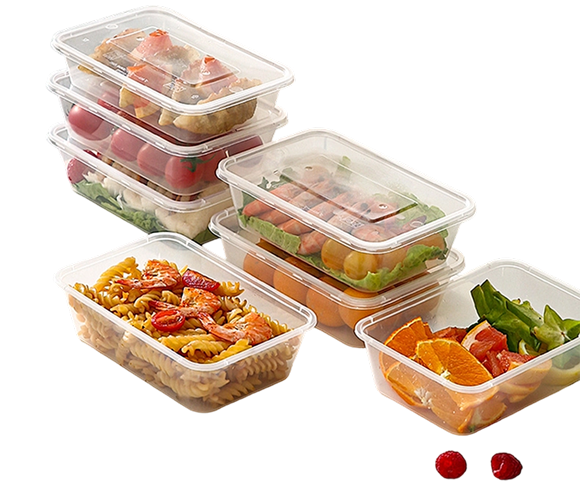
Walking into any fresh food supermarket or fruit shop, transparent injection-molded containers can be seen everywhere. These products emphasize display capability—the high transparency of PP material allows customers to see the color and freshness of the product at a glance, making it an important carrier of "visual marketing".
Application Scenario Description
Walking into any fresh food supermarket or fruit shop, transparent injection-molded containers can be seen everywhere. These products emphasize display capability—the high transparency of PP material allows customers to see the color and freshness of the product at a glance, making it an important carrier of "visual marketing". One restaurant owner reported that after switching to thickened transparent containers, the rate of customers taking photos doubled, demonstrating the obvious effect of the "aesthetics economy".
Typical Use Cases
Fresh-cut fruit: Transparent container body showcases fruit color, stackable design saves refrigeration space
Prepared meals/semi-finished products: Sealed locking design prevents liquid leakage, directly microwaveable
Supermarket deli section: Standard container for self-service weighed foods
Salad/light meals: Transparent containers reinforce the "healthy and fresh" product positioning
Industry Pain Point Analysis
Although transparent injection-molded containers are widely used in the fresh food retail industry, they still face some pain points:
1. Insufficient packaging performance — frequent liquid leakage and odor transfer
Fresh food products (especially fresh-cut fruits and prepared meals) have high water content and varying oil content, requiring extremely high packaging sealing and barrier performance. Insufficient barrier performance leads to high permeation of external oxygen and water vapor into the interior, causing product oxidation, discoloration, and moisture-related spoilage.
2. Environmental pressure vs. cost contradiction — the dilemma of green transformation
Driven by the "dual carbon" goals and growing consumer environmental awareness, the fresh food retail industry faces increasing environmental pressure. However, the green transformation of fresh food packaging faces practical challenges: high costs and unstable performance. Some biodegradable films become brittle and crack in cold chain environments, instead increasing spoilage rates. At the same time, there is a lack of recycling systems — most communities do not have industrial composting facilities, so so-called "biodegradable" packaging still ends up in landfills, leaving the environmental benefits in question.
Solutions Provided by the Product
We understand that these industry pain points are precisely the direction for product upgrades among injection-molded container manufacturers:
For the food safety of fresh products, we have developed tamper-evident seals that not only improve the tightness of the container but also lock in freshness and prevent odor transfer. Packaging performance is further enhanced by improving its sealing and barrier properties.
We also support the use of biodegradable materials and lightweight design, which saves costs while achieving environmental sustainability.
We look forward toworking with you.
Feel free to reach out for any queries. We would be happy to help!